Possibly the most important part of SEO is effective link building. You want to build a quality link profile to enhance your site’s authority, whilst trying to avoid any black hat practices. Link building involves creating a link to and from other websites as well as using internal links within your own website. Backlinks are a form of hypertext links that provide navigational information for the search engines’ crawlers, making it easier for them to index content and see what external sources they are referring to.
Why Is So Much Emphasis Placed on Link Building?
Search engines use links to discover and explore new websites and pages. The data gathered helps search engines assign SERP rankings. The quality of incoming links defines a domain’s ‘authority’. Linking to high-authority sites will boost your rankings, while poor-quality links will have the opposite effect.
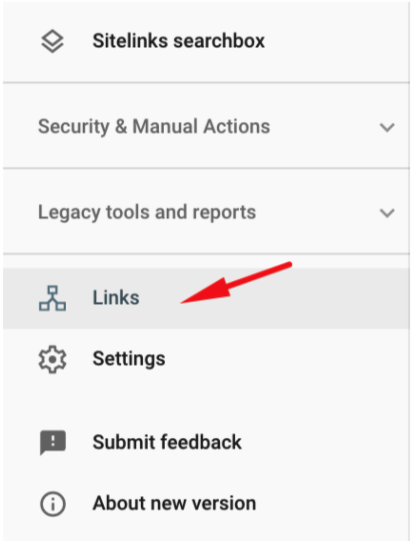
Google’s PageRank
Google first started using PageRank in the mid-1990s, and the number of backlinks rather than their authority was the priority. Effectively, the more links you had, the higher you ranked, regardless of if they were relevant or not. After various algorithm updates, Google now prioritises quality links, penalising manipulative techniques. As of 2024, it’s less about the number of links and more about their relevance and quality.
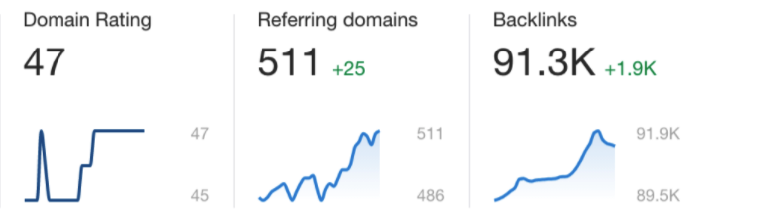
Types of Backlinks in SEO
Backlinks (inbound links) are essential for SEO, directly influencing your ‘domain rating’. They fall into two broad categories (you can drill down on these but it is not a requirement for general SEO):
- Do-follow backlinks – the authority of the linking page is passed on to the link page so is therefore extremely valuable. The authority is commonly referred to as “link juice”.
- No-follow backlinks – links to many sites such as the BBC, for example, don’t score you any points when it comes to SEO but are valuable nevertheless as they are relevant for the user. They contain the HTML tag: rel=“nofollow”, instructing search engine crawlers to ignore the link for ranking purposes.
What is Anchor Text (in Links)?
Whenever you see a hyperlink on a website, the visible part that you click on is known as the anchor text. It provides clues to search engine crawlers about the content of the linked page. Using relevant keywords in anchor text can enhance a page’s relevance in SERPs.
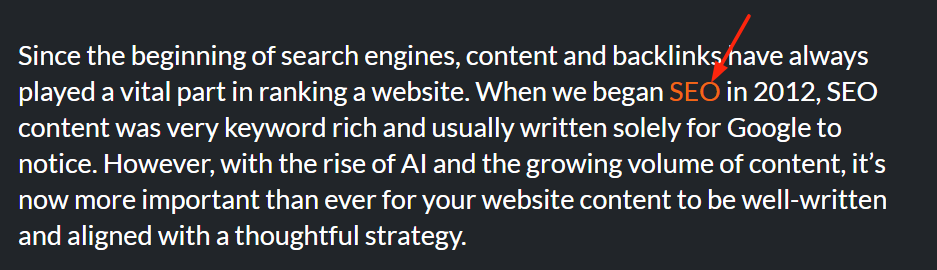
If pages on your own website or other websites use specific keywords in their anchor text that links to your webpage, it can help to reinforce that page’s relevancy and in turn your keywords to rank higher in SERPs.
Will using lots of backlinks with my keyword as anchor text guarantee high rankings?
No. Over-optimised anchor text can lead to penalties. As Google’s algorithms have evolved, natural variation in anchor text is essential. It is essential that you find the right balance when it comes to your anchors. It would be best if you varied them between:
- Your brand name “Phoenix Media”
- Keywords and phrases “SEO Services in Bangkok”
- Branded terms “digital marketing by Phoenix Media”
- Generic anchor text “web design” – linking to a specific page
- “Naked” URLs “phoenixmedia.co.th”
- Call to Actions (CTAs) “click here”

The Importance of Quality Backlinks
It is impossible to overstate how vital quality backlinks are, but Google takes several different factors into account when determining their “quality” including:
- Domain authority
- Page authority
- Profile quality metrics outlined by Moz and Majestic, including:
- Moz Page Authority (PA)
- Moz Domain Authority (DA)
- Majestic Trust Flow (TF)
- iv. Majestic Citation Flow (CF)
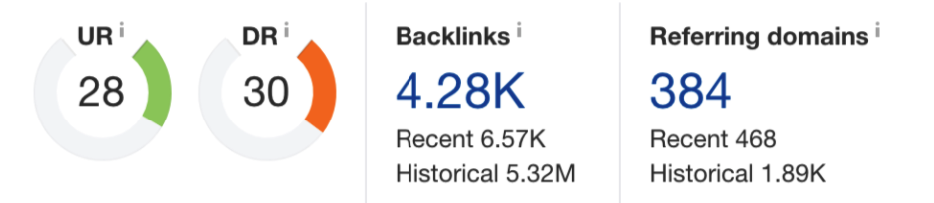
Each of these metrics is given a score, and the higher the score, the higher the perceived value of the backlink. The TF also suggests that websites closely linked with a trusted site can again score higher values, but sites that refer to less reputable sources may score poorly. The CF is a prediction relating to how influential a specific URL might be, and the score is based predominantly on how many sites are referenced and linked within the content.
Relevance and Placement of Links
Of course, it should go without saying that references and links need to relate to the content. In the past, websites used to link to anything to build up the number of links that they had. It was common for a bakery to link to an equestrian shop or a garage, but the links were irrelevant to the reader.
Where should links be placed?
As a general rule, links that appear naturally in the body of the article score far higher than those that are included in footers or sidebars. Single links are also more valuable than sitewide links. However, sitewide links are very useful if used correctly when it comes to internal or external link building.
They generally appear in the sidebar, footer or in the scrolling blogrolls that many sites feature. They are capable of generating significant amounts of traffic, but they should appear naturally, and you do need to be aware that they carry less weight.
Any link that you use should be fresh, and the popularity of the source and the social signals that it generates will have an impact on how Google judges it in terms of quality.
Modern Link Building Strategies
Old techniques like reciprocal links and directory submissions are no longer effective. In 2024, the focus is on building high-quality links through modern and more effective methods:
Guest Posting
Guest posting, or Blogger Outreach, is probably the most effective and commonly used for building quality backlinks. It does involve quite a lot of work. You need to write a blog or an article and publish it on an authoritative website.
Of course, the content needs to be of a good quality for it to be accepted, but assuming that it is, you will be able to include a backlink in your article and they will get some valuable content. The benefit for both parties is obvious.
Google is clamping down on this technique, especially on inferior websites which would accept poor quality postings, as it has been open to abuse. However, quality content will always be rewarded, so focus on quality rather than quantity. If you do plan to use guest postings as part of your outreach campaign, you should consider the following points:
- Always keep it personal
- Never use templates
- Keep content relevant and research-driven.
- Study your competitors’ backlinks for opportunities.
Find out where your competitors are backlinking to
There are no short-cuts when it comes to building quality backlinks but finding out what is working for your competitors, is a very effective, but time-consuming approach. Once you know what they are doing, it is your job to create something better and involve more industry gurus. There are several tools that you could use to do this, and a simple search on Google will give you plenty of options.
After you establish where your competitors are linking, you need to produce something for yourself. Remember, it must be unique, and you will be penalised for plagiarism, but opportunities and ideas will undoubtedly present themselves. We would suggest that you study various articles that they have posted and evaluate:
- The link relevance – could you write an article that could incorporate their link?
- The strength of the link – have they linked to an authoritative website, or do you know one that is better?
- Is there an opportunity to get a backlink? Would the author or owner of the article or website that you have linked to, provide a link back to your site (reciprocal link)? If you are feeling particularly cheeky, you could reach out to the owner of the website and ask them to replace the backlink of your competitor. This form of email outreach is known as the Skyscraper Technique, and not surprisingly is not always viewed as ethical!
Additional Link Building Techniques
- Broken Links – another time-consuming but beneficial technique is to find websites with inactive links. Using email outreach, you could ask them to link to your active content instead
- Social Media – you can gain social backlinks by sharing your content on social media. It is also worthwhile participating in relevant discussions, joining groups and commenting on connected posts
- Content-based Link Building – you write quality content which is designed to attract backlinks and with it social shares and referral traffic. In effect, you want your content to go viral, which is easier said than done!
- Testimonials – write an honest testimonial for a product and include a backlink to your website
- Paid Blog Posts – in effect you are buying backlinks, but you need to be careful that you don’t get drawn into any black hat or grey hat SEO techniques
- PR Articles– these articles are professionally written and appear on news portals. You will get great backlinks, but your story needs to be relevant, and it can be costly
- Forum Contributions – try to appear on “top 10s” and appear in comments as well as the main body of content. Even business listings can be useful, so long as they are relevant!
We discuss link building techniques in more detail in this blog article.
The Risks of Black Hat Techniques
Although not as prevalent as they used to be, paid backlinks and PBNs (Private Blog Network) still exist and are a fast way of building links. However, these links are viewed as being of low quality and that the buyer is looking to “cheat” Google. At best, these techniques would be regarded as grey hat, but most would argue that they are black hat. Google will almost certainly detect the pattern and penalise you accordingly.
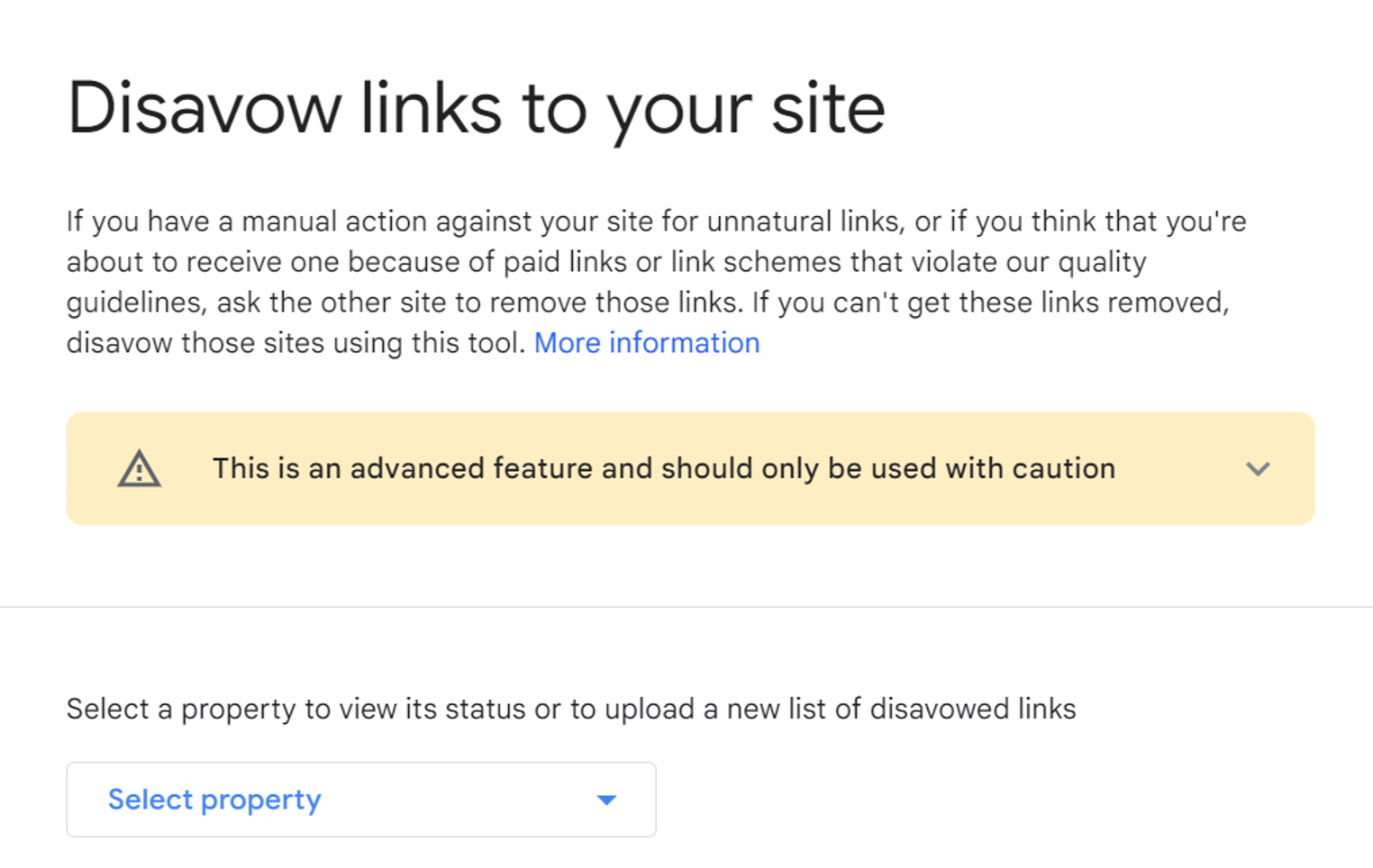
Ever since the Google Penguin algorithm update back in April 2012, Google could detect what it regards as spammy and low-quality links. However, as Google has advanced, it can recognise if these poor links were created intentionally or whether it was just a poor link choice. If you did create them intentionally, you could expect to see your rankings plummet quickly. If you are concerned that you have some suspect links, we would suggest that you disavow them via the Search Console.
Example ‘branded’ anchor text link
Key points regarding link building
- Build links consistently, focusing on quality over quantity.
- Focus on high-quality links; don’t settle for low-quality options.
- Maintain a varied and natural anchor text distribution.
- Never use black hat SEO tactics.
- Always try to get backlinks that can generate referral traffic.
Want to know more about backlinks?
If you would like more information on backlinks, or a free review of your current link profile, speak to one of the team today on 02 038 5400.
- 1. Why is so much emphasis placed on link building?
- 1.1. Google’s PageRank
- 1.2. Types of backlink in SEO
- 2. What is Anchor text (in Links)?
- 3. The importance of quality backlinks
- 3.1. Relevance
- 4. What are the different link building strategies?
- 4.1. Guest posting
- 4.2. Find out where your competitors are backlinking to
- 4.3. Other link building techniques
- 5. Adopt black hat techniques at your peril!
- 6. Want to know more about backlinks?