On-site SEO has seen considerable evolution in recent years. If you want to excel in SEO in 2024, it’s crucial to be completely familiar with the latest practices. Unlike five years ago, when on-site SEO focused mainly on meta tags, headlines, and content often over-optimised to the point of being unreadable, today’s approach is more refined. The checklist has undergone significant changes, making it one of the most dynamic aspects of SEO.
Search engines, particularly Google, have sophisticated algorithms that increasingly prioritise user engagement and content quality. As a digital marketing agency, we ensure that we provide quality content that meets these criteria. We fully appreciate the human element in our work, understanding that user engagement is key. The results of our on-site efforts are more visible than ever, something our clients value, and that we take pride in.
What are Meta tags?
Meta tags are essential components of HTML coding that describe the content of a web page. The most important meta tags are the meta titles, H1’s, and meta descriptions. Although their technical importance has diminished, they still play a crucial role, particularly in influencing click-through rates (CTR) and user engagement.
Contrary to popular belief, keyword stuffing in the description does not affect rankings. However, a well-crafted meta-description can significantly impact user behaviour.
Meeting Google’s algorithmic requirements is vital, but so is addressing the human element. Google’s recent updates to how it generates titles and descriptions underscore the importance of relevance. Tools like Yoast offer excellent suggestions for improving technical content, but they cannot fully capture the human aspect. Therefore, when optimising your SEO, give equal attention to both technical accuracy and user appeal.
On-site SEO Checklist
Since most websites today are built on WordPress, we will focus on it, though the principles apply to any content management system (CMS).
What are people searching for?
Before you start writing, you must know what people are searching for. You could write awesome content, but if no one is searching for that topic; your efforts will be in vain. Once you know what queries people are submitting, think about how you can write something that offers a unique spin or offers different information.
It needs to be factually accurate, but can you add value, or offer something that will capture readers’ attention. Of course, timing is crucial in making your content more relevant.
Landing pages and blogs both require some degree of keyword research, and this is a topic that we will look at in greater depth in chapter five.
1. Title tags and headlines
Headlines have always been crucial for capturing readers’ attention, and that remains true in 2024. Crafting compelling title tags, headlines, and meta descriptions is essential. Include your primary focus keyword wherever possible to help both users and search engines understand what your page is about. Additionally, incorporating a call-to-action (CTA) in the meta description can significantly boost conversion rates.

The goal is to be persuasive without being pushy. You want to search engines and users to feel compelled to click on your website. Reaching the end-user is the priority, so make sure and titles, description or headlines match the image you want to convey.
Always take note of what your competitors are doing and find out what is working. There is no shame in including this in your SEO strategy.
Key points about title tags and headlines:
- Titles should be under 60 characters, and meta descriptions under 130, as this is what will be displayed in Google’s search results (for mobile).
- Use proper structure for H1 and H2 headings, ensuring they are easy to read and understand.
- Use WordPress plugins and tools like SEO Yoast to assess the Meta Tag optimisation
2. Keep Your URLs SEO Friendly

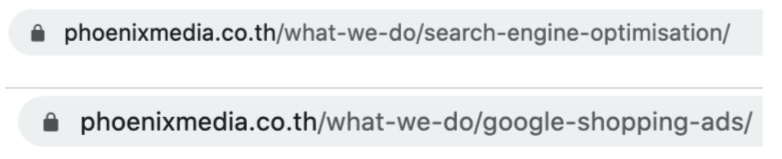
For SEO, URLs should relate to the content of the page and include relevant keywords, rather than random characters. For example, instead of a URL like www.abctrading.com/2024/post256e7a357g8, use something like www.abctrading.com/how-to-peel-an-onion.
Key Points about URLs:
- Include keywords in the URL where possible.
- While the length of the URL is debated, focus on user experience and relevance rather than the number of words.
3. Multimedia
Multimedia, including videos, images, infographics, and charts plays a crucial role in SEO by increasing engagement and reducing bounce rates. Live streaming and video content have become particularly popular, often generating more shares, likes, and comments, which can indirectly boost your SEO.
Key Points for Multimedia:
- Optimise all images for file size, alt attributes, and filenames.
- Embed interactive multimedia, such as videos and charts.
- Provide transcripts for videos to improve accessibility and keyword usage.
4. Links – internal and outbound
Using links in your blogs and your landing pages is a critical part of your SEO. Outbound links to relevant as well as authoritative sources will send a relevancy signal to Google. Meanwhile, internal links promote user higher engagement as you can link to other pages or articles within your website. The links play a role in helping Google’s bots to recognise and understand the structure of your website. As one of our main target keywords is SEO Company Bangkok, we link this back to the relevant target page for this keyword.
Key points for internal and outbound links
- Key points for internal and outbound links
- Outbound links enhance user experience and demonstrate to Search engines where information has been sourced.
- Aim to include 2-3 internal links per piece of content, depending on its length.
- Regularly check for broken links and avoid black hat SEO tactics.
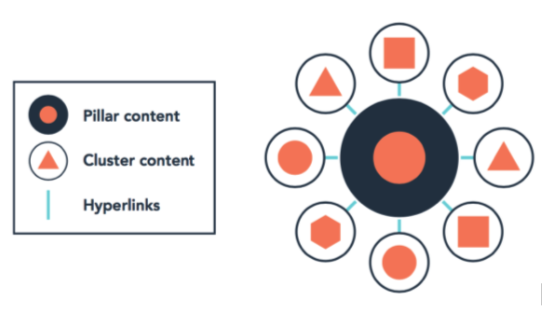
- Implement the “topic cluster model” for internal linking to improve site structure.
Use the “topic cluster model” for internal linking
5. Allow people to engage
Although excellent content still gets shared, according to Optinmonster, 59% of people may share a blog article without reading it first. So always include a share button on any content to make sharing easier. The main social media sites are still Twitter, Facebook, Instagram, and LinkedIn, but topic-related social media networks, including Reddit and Pinterest, should not be overlooked.
On-page (technical) SEO checklist
Technical SEO focuses on optimising the backend of your website to improve its performance and search engine ranking. Most of the technical stuff does require some knowledge of web development and coding. However, WordPress can do some of the heavy lifting for you.
Here are some of the critical parts of the technical on-page SEO that you should focus on:
1. Google Search Console
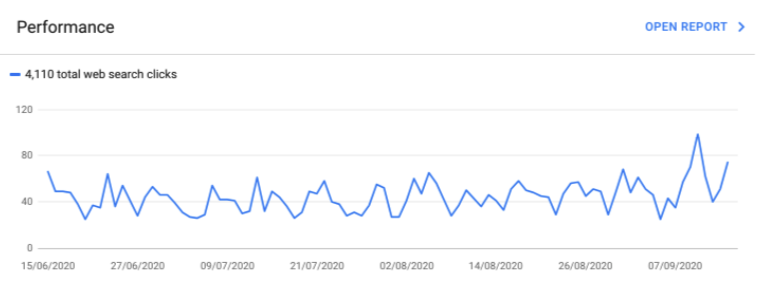
Setting up and connecting Google Search Console should be top of the list of priorities. It is a simple yet highly effective tool that will help you to monitor and maintain your presence on Google. You can analyse keyword rankings, any Google penalties, CTRs as well as including lots of other useful technical data that can be used as part of your overall SEO strategy.
Google Search Console gives you information about mobile usability, deciding what you want to be indexed, errors on your site along with structured data errors and broken links. Essentially, it automates several very time-consuming tasks.
Key points about Google Search Console
- Each website needs to be verified before you will have access to the features
- Use Google Analytics in conjunction with Search Console
2. The Speed of Your Website
Website speed is more critical than ever. According to Kissmetrics, 47% of website users expect pages to load in less than two seconds, longer than three, and 40% will look at another site. Google considers page speed as a ranking factor, so optimising your site’s load time is essential.
Key points regarding website speed
- Use PageSpeed Insights to test the speed of your site
- Optimisation is key, optimise images, use HTML compression, GZIP compression, JS and CSS minification. Where possible, try to lower server response times
Make sure that you use a quality and trustworthy web hosting provider as this will impact on website speed.
(LCP is a Core Web Vital metric that measures how quickly a web page’s main content loads. FCP relates to any part of the content on the page)
3. Mobile optimisation
With more searches conducted on mobile devices rather than on desktop computers, your website must be optimised for mobiles, if not it will harm your rankings. Mobile-first indexing was first launched by Google in March 2018 and will use the mobile version of your website for indexing purposes, so if your website doesn’t have a mobile version, you will be penalised.
Key points to consider for mobile optimisation
- You can test the responsiveness of your site using Mobile-Friendly Test
- Check how your keywords rank on mobile devices
- Frequently check that the mobile version of your site is functioning correctly
- Use Accelerated Mobile Pages (AMP) – a form of HTML code
4. Sitemap
Although only a minority of users will ever use your sitemap, it is one of the few areas of your website that will be focused more on the search engines needs rather than the needs of the user. It will help bots to crawl your site and is particularly useful if you have a large site that is rich in media content. It won’t improve your rankings, nor will you be penalised for not having one, but it is always beneficial to assist Google wherever possible!
Key points with sitemaps
- It is not essential to have one
- It doesn’t necessarily need to be an XML sitemap
- They shouldn’t contain over 50,000 URLs or be larger than 50MB
- The root directory should be https://abctrading.com/sitemap.xml
5. Robots.txt
The robots.txt file is essential for managing which parts of your site search engine bots can access. Use it to prevent indexing of pages or resources that are not relevant to users or search engines.
robots.txt syntax:
User-agent: * (e.g. Googlebot)
Disallow: / (e.g. /images/onion.png)
Key points
Ensure the file is properly configured to prevent crawlers or malware from exploiting it.
Important: Avoid using robots.txt to hide content that should be indexed.
Key points
- Never use it as a means of hiding content from the search engines – black hat SEO techniques!
- Neither crawlers nor malware should be able to infiltrate robots.txt
Useful technical SEO hacks
The first part is to conduct a thorough analysis of the current state of your website. There are numerous sites that you use, Ahrefs is one of our favourites, along with Screaming frog, check out our Top 5 SEO Tools here.
If you set up Google Tag Manager, you can do your own advanced tag management without needing to call upon the assistance of an expensive web developer.
Always ensure your site is secure by using HTTPS rather than HTTP. Google and users place a high value on security, and sites without an SSL certificate are labelled as “not secure” by Chrome.
URL/IP canonicalisation: The website should be indexed under both the domain name and IP address and should mean:
abctrading.com and abctrading.com/ should resolve to the same URL.
If you’re confused with the technical aspect of Onsite SEO, or what content you should be producing, speak to one of the team on 02 038 5400.
- 1. What are Meta tags?
- 2. On-site SEO Checklist
- 2.1. Title tags and headlines
- 2.2. Keep your URLs SEO friendly
- 2.3. Multimedia
- 2.4. Links – internal and outbound
- 2.5. Allow people to engage
- 3. On-page (technical) SEO checklist
- 3.1. Google Search Console
- 3.2. The speed of your website
- 3.3. Mobile optimisation
- 3.4. Sitemap
- 3.5. Robots.txt
- 4. Useful technical SEO hacks