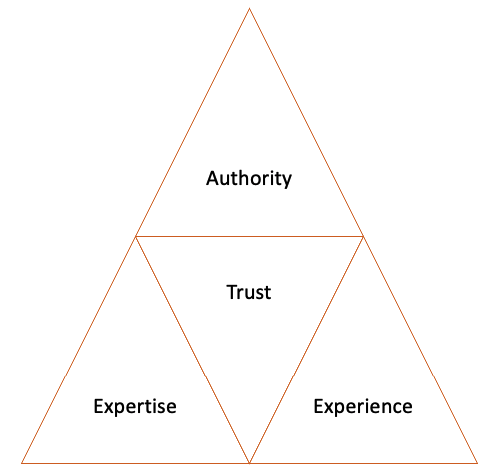
E-E-A-T stands for Experience, Expertise, Authoritativeness, and Trustworthiness. It is a framework used in Google's Search Quality Rater Guidelines to assess the quality of web content. While E-E-A-T is not a direct algorithmic ranking signal, it describes the qualities that Google's algorithms are designed to reward, making it an important concept for anyone producing content for SEO.
What does each component mean?
Experience refers to first-hand, real-world experience with the topic. A product review written by someone who actually used the product demonstrates experience that a generic summary does not. Google added the second E (Experience) to the original E-A-T in December 2022, reflecting the importance of lived experience in content credibility.
Expertise refers to having knowledge or skill in the relevant subject area. For medical, legal, financial, or technical content, Google expects the content to be produced or reviewed by someone with verifiable qualifications or credentials in that field.
Authoritativeness refers to the reputation of the content creator, the page, and the website within its subject area. A site that is widely cited, linked to, or recognised by other authoritative sources in its field demonstrates high authoritativeness.
Trustworthiness is considered the most important of the four and encompasses accuracy, transparency, and honesty. Pages that clearly identify their authors, provide accurate and up-to-date information, disclose affiliations or sponsorships, and demonstrate secure and professional website practices score highly on trustworthiness.
Why does E-E-A-T matter for SEO?
Google uses human quality raters to assess search results using criteria that include E-E-A-T. These ratings inform improvements to the ranking algorithms. Pages and sites that demonstrate strong E-E-A-T signals tend to perform better in search, particularly for YMYL (Your Money or Your Life) topics: health, finance, legal, and safety-related content where inaccurate information could directly harm users. For these topic areas, Google applies its quality standards most rigorously.
How do you improve E-E-A-T?
Practical steps to strengthen E-E-A-T signals include: identifying and credentialing the authors of your content (bylines, author bios, links to credentials); ensuring all factual claims are accurate and cited; keeping content up to date; building backlinks from authoritative sources in your industry; displaying business contact information and policies clearly; and earning positive coverage, reviews, and mentions across the web. For businesses in Thailand, demonstrating local expertise and credibility through Thai-language content and local citations is also relevant.