Keyword mapping is the process of assigning specific target keywords to individual pages on a website, ensuring that each page is optimised for a defined set of search terms and that no two pages compete for the same keywords. It is a foundational step in SEO strategy that prevents keyword cannibalisation and ensures that every page has a clear focus.
Why is keyword mapping important?
Without keyword mapping, multiple pages on a website can end up targeting the same or overlapping keywords, which causes them to compete with each other in search results. This is called keyword cannibalisation and can dilute ranking potential across all the competing pages. Keyword mapping prevents this by clearly defining which page owns which keyword, allowing each page to be fully optimised without internal competition. It also provides a roadmap for content creation, showing which topics are covered and where gaps exist.
What does a keyword map look like?
A keyword map is typically a spreadsheet that lists each URL on the website alongside its assigned primary keyword, supporting secondary keywords, the page's content type, and current ranking data. A simplified example:
| URL | Primary keyword | Secondary keywords | Content type |
|---|---|---|---|
| /seo-services | SEO services Thailand | SEO agency Bangkok | Service page |
| /what-is-seo | what is SEO | SEO definition, SEO basics | KB article |
| /seo-pricing | how much does SEO cost | SEO cost Thailand | FAQ/pricing |
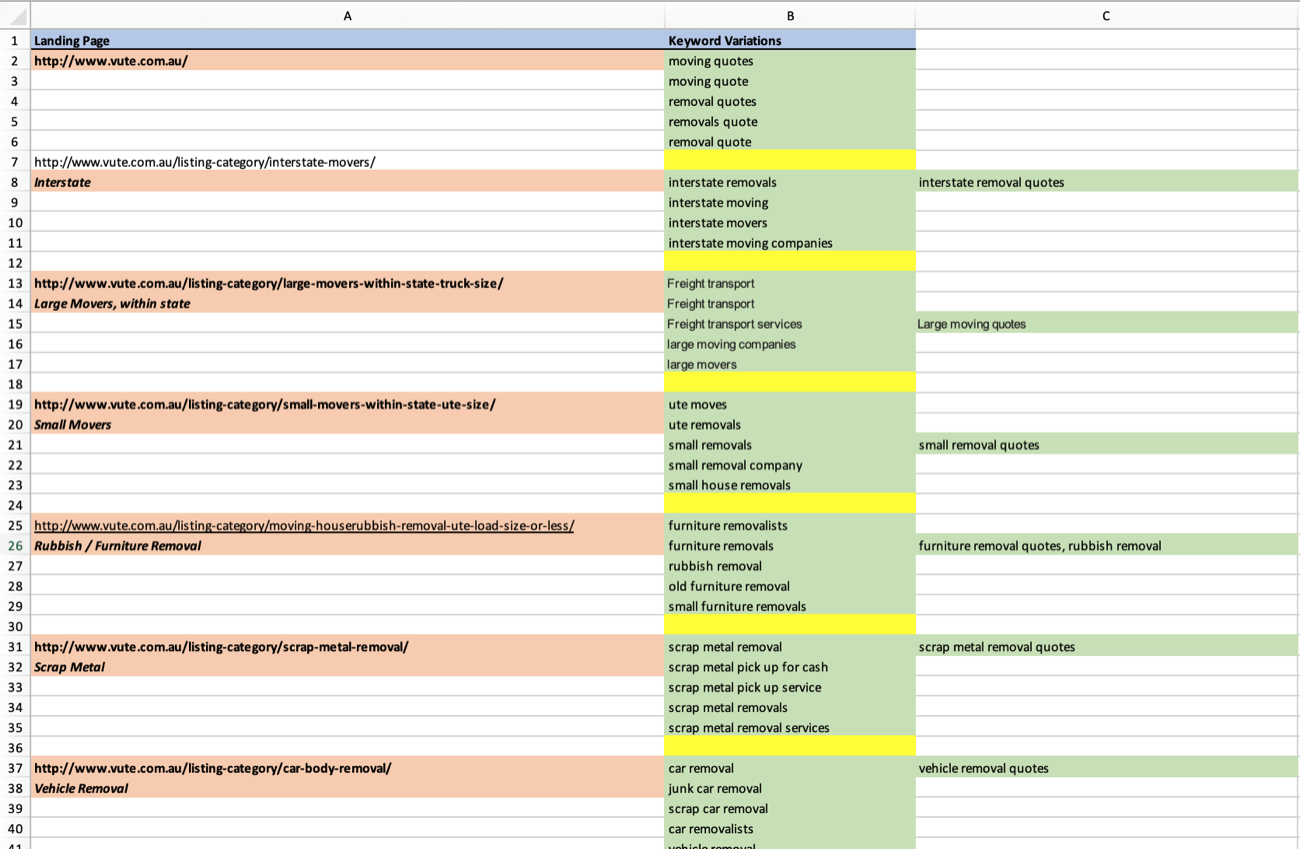
How do you build a keyword map?
The process starts with keyword research to identify all the terms your target audience uses to find businesses like yours. Those keywords are then grouped by topic and search intent (informational, navigational, transactional) and matched to the most appropriate existing or planned page on the website. If no page currently exists for a high-value keyword cluster, a new page or article may be needed. The keyword map is then used to guide on-page optimisation: page titles, headings, and content are written around the mapped keywords for each page.