An organic listing is a search result that appears in a search engine's results page because of its relevance to the search query, not because the website owner has paid to place it there. Organic listings are determined entirely by the search engine's algorithm. You cannot pay to rank in the organic results; ranking is earned through SEO.
Where do organic listings appear?
On a Google search results page (SERP), organic listings typically appear below any paid search ads at the top of the page. They are presented as blue linked titles with a URL and a short description, known as a meta description. Google also surfaces various enhanced organic formats including featured snippets (a boxed answer at the top of results), People Also Ask boxes, image carousels, and local pack listings for businesses with a Google Business Profile. All of these formats are organic unless they are labelled as sponsored.
How is an organic listing different from a paid listing?
Paid listings (also called paid search ads or PPC ads) appear at the top or bottom of the search results page and are labelled as sponsored. The advertiser pays each time a user clicks on the ad, and the position is determined by the bid and ad quality. Organic listings involve no cost per click; however, achieving and maintaining a good organic position requires ongoing investment in SEO.
| Organic listing | Paid listing | |
|---|---|---|
| Cost per click | None | Yes, set by bid |
| Position determined by | SEO and algorithm | Bid, budget and ad quality |
| Label on page | None | Sponsored |
| Ongoing cost | SEO investment (time/resources) | Ad spend required continuously |
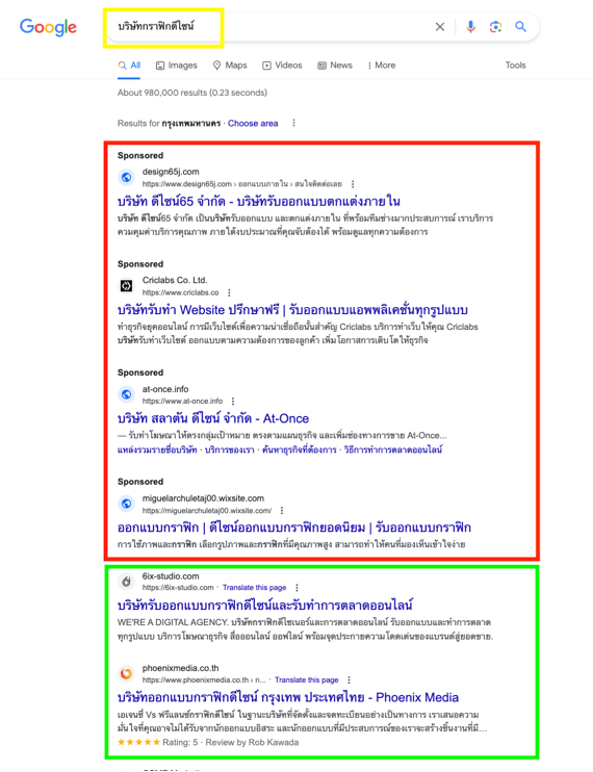
What determines organic ranking?
Google's algorithm uses hundreds of signals to determine organic rankings. The most significant factors include the relevance and quality of the page's content to the query, the authority of the website as indicated by its backlink profile, technical factors such as page speed and mobile-friendliness, and how well the page is structured for search engines (on-page SEO). The algorithm is updated regularly, which means organic positions can change over time even without any changes to a website.
Related terms
SEO (Search Engine Optimisation): the practice of improving a website's content, structure, and authority in order to rank higher in organic search results.
SERP (Search Engine Results Page): the page displayed by a search engine in response to a query, containing both organic and paid listings.
PPC (Pay-Per-Click): a paid advertising model where the advertiser pays each time a user clicks their ad. Paid search ads on Google use the PPC model.
Featured snippet: an enhanced organic result that displays a summary answer to a query in a highlighted box at the top of the SERP, often referred to as position zero.