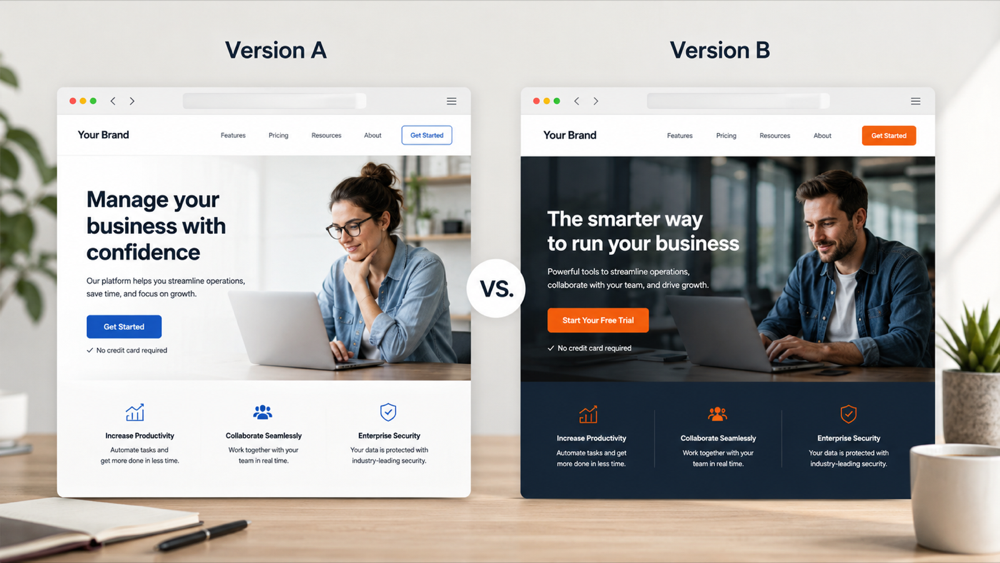
A/B testing (also called split testing) is the practice of comparing two versions of a piece of content, ad, or page to determine which performs better. One version (A) is shown to one group of users, and the other version (B) is shown to a different group. The performance of each version is measured against a defined metric, such as click-through rate, conversion rate, or revenue, and the better-performing version is identified based on data rather than opinion.
What can you A/B test?
A/B testing can be applied to almost any element that affects user behaviour:
- Ad creatives and copy: testing different headlines, images, or calls to action in Google Ads or Meta campaigns
- Landing pages: testing different headlines, button text, page layouts, or offers
- Email subject lines and content: testing which subject lines generate higher open rates
- Website elements: testing button colours, form placement, or navigation structure
- Pricing and offers: testing different price points, discount structures, or urgency messaging
Why is A/B testing important?
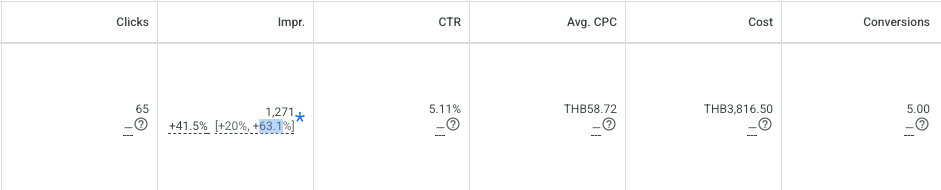
A/B testing removes guesswork from marketing decisions. Small changes to an ad headline, a landing page button, or an email subject line can produce significant differences in conversion rates, but it is rarely possible to predict which version will perform better without testing. Consistently testing and implementing winning variants compounds over time: a series of 5-10% conversion rate improvements across multiple touchpoints can meaningfully increase overall campaign performance without increasing spend.
What are the key principles of a valid A/B test?
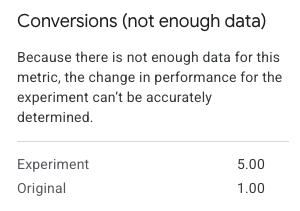
For an A/B test to produce reliable results, it should test only one variable at a time (so you know which change caused the difference), run for long enough to reach statistical significance rather than being called early based on small sample sizes, and run both variants simultaneously rather than sequentially to control for time-based variables such as day of week or seasonality. In paid advertising platforms like Meta and Google Ads, built-in experiment tools handle the statistical work and traffic splitting automatically. At Phoenix Media, A/B testing is a standard part of campaign management in Thailand: language and creative differences between Thai and English audiences often produce substantially different results, making regular testing essential rather than optional.