A CRM, or Customer Relationship Management system, is software that centralises a business's interactions with leads and customers in one place. It stores contact information, tracks communication history, logs sales activity, and provides a shared view of every relationship across your team. For businesses of any size managing ongoing client relationships, a CRM is one of the most important tools available.
What does a CRM actually do?
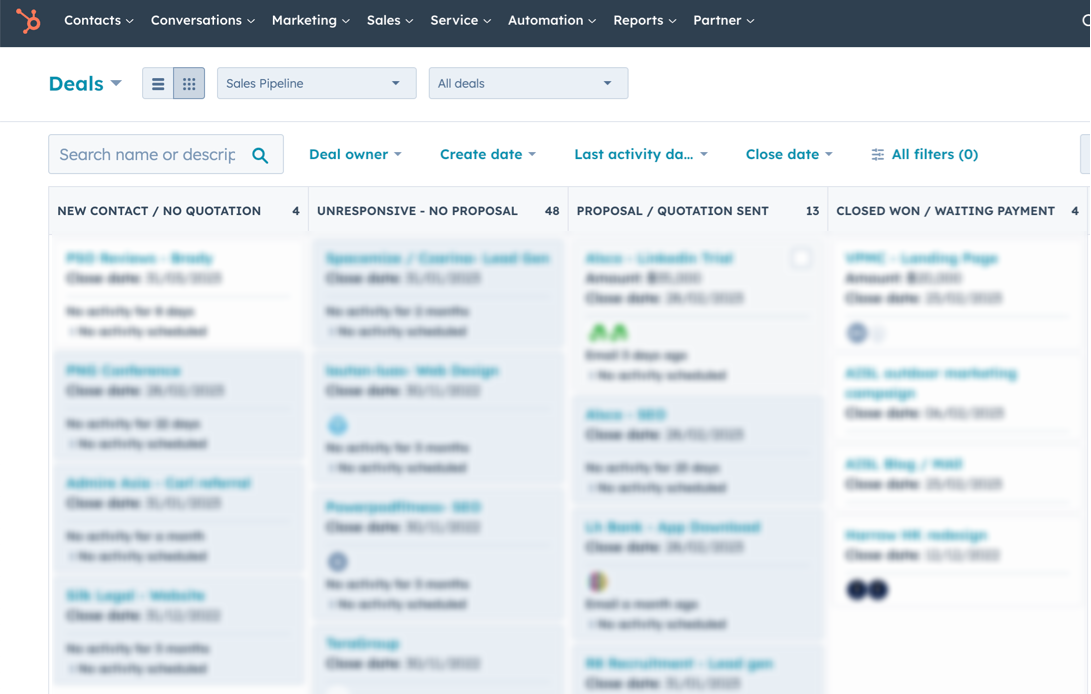
At its core, a CRM replaces scattered spreadsheets, email inboxes, and memory with a structured database of relationships. It logs every call, email, and meeting with a contact; tracks where each lead sits in your sales pipeline; sets reminders for follow-ups; and records the full history of a client account so anyone on the team can pick up where another left off. More advanced CRMs connect to your marketing tools so you can see exactly which campaigns, ads, or content pieces are generating leads and converting them into customers.
Why is a CRM important for business growth?
Without a CRM, relationships live in individual inboxes and people's heads. When a team member leaves, that knowledge goes with them. Follow-ups get missed.
Leads fall through the gaps. A CRM solves these problems by making the business's relationship with each customer a shared, trackable asset. It also gives management visibility into sales performance without relying on self-reporting: you can see how many leads are in the pipeline, which deals are stalling, and where the revenue is likely to come from.
Which CRM should my business use?
The right CRM depends on your team size, industry, and how you sell. HubSpot is popular for businesses that need both CRM and marketing tools together, with a strong free tier to start. Salesforce is the enterprise standard but is complex and costly for smaller teams.
Pipedrive suits sales-focused teams that want a simple pipeline view. For businesses in Thailand using LINE as a primary communication channel, some CRM providers offer LINE integration, which can be an important consideration when choosing a platform.
When should a business invest in a CRM?
The right time to implement a CRM is before your team outgrows its current process, not after. Common indicators that a CRM is needed include: leads being lost or forgotten, no clear visibility into the sales pipeline, difficulty handing over accounts between team members, or no consistent record of what has been said to each customer. Starting a CRM implementation early, while the team is small, is far easier than trying to migrate a large volume of existing data and change ingrained habits later.