Attribution in digital marketing is the process of identifying which channels and touchpoints contributed to a conversion. When a customer makes a purchase or submits an enquiry, they will typically have interacted with more than one marketing channel along the way. Attribution helps determine how much credit each of those interactions should receive, so businesses can understand where their budget is having the most impact.
Why does attribution matter for digital marketing campaigns?
Without attribution, it is difficult to know which parts of a campaign are actually driving results. In Thailand, where it is common to run campaigns across Google Ads, Facebook, and LINE simultaneously, attribution data makes it possible to:
- Shift spend towards higher-performing channels
- Reduce investment in channels that are underperforming
- Build a clearer picture of the customer journey from first contact to sale
- Make informed decisions about content and channel investment
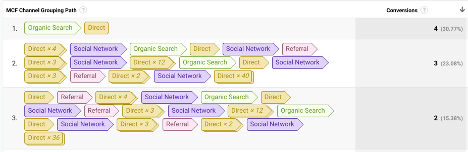
What are the main attribution models?
Attribution models fall into two categories: single-touch, which gives all credit to one interaction, and multi-touch, which distributes credit across the journey. The table below summarises the most common models:
| Model | How credit is assigned | Best suited to |
|---|---|---|
| First Touch | 100% to the first interaction | Awareness campaigns |
| Last Touch | 100% to the final interaction before conversion | Short, simple purchase journeys |
| Linear | Equal credit to every touchpoint | Multi-channel campaigns with no clear dominant channel |
| U-Shaped | 40% first touch, 40% last touch, 20% split across middle | Campaigns where first impression and final push matter most |
| Time Decay | More credit to touchpoints closer to the conversion | Short sales cycles where recent interactions are most influential |
Which attribution model should you use?
The right model depends on your sales cycle, the number of channels you are running, and how customers typically find and engage with your business. For short, simple purchase journeys, Last Touch is often sufficient. For campaigns that involve multiple channels over a longer period, a multi-touch model will give a more accurate picture.
It can also be useful to run more than one model at the same time and compare the results, as the differences between them often highlight where your assumptions about channel performance may be wrong. Most platforms including Google Ads and GA4 allow you to switch between models and compare the data.