SEO plugins are useful tools that make it easier to implement on-page SEO correctly, but they do not rank websites on their own. Installing an SEO plugin is not a substitute for quality content, a strong backlink profile, or technical site health. What plugins do is simplify the process of configuring the SEO elements Google needs to understand and index your pages.
What do SEO plugins actually do?
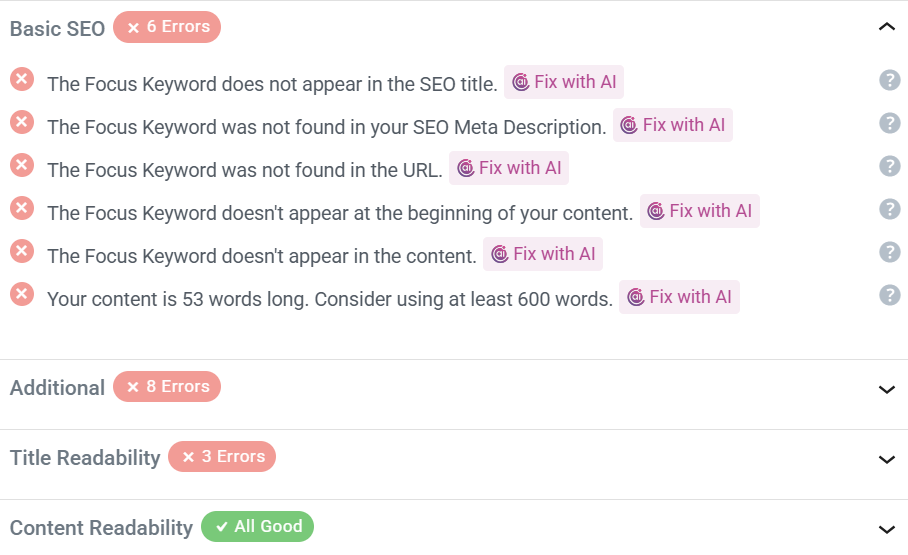
On a WordPress site, SEO plugins provide an interface for editing page titles, meta descriptions, canonical tags, Open Graph data, robots directives, and structured data markup without needing to edit code. They also generate XML sitemaps, flag basic on-page issues such as missing meta descriptions or thin content, and provide readability scores. These are all tasks that would otherwise require manual coding or a developer, so plugins make them accessible to non-technical users.
Which SEO plugins are most commonly used?
For WordPress, the two most widely used plugins are Yoast SEO and Rank Math. Yoast has been the market leader for over a decade and is known for being beginner-friendly. Rank Math has grown rapidly, offering more features in its free tier.
Both handle the core on-page SEO requirements effectively. All in One SEO (AIOSEO) is another option with strong functionality. For Shopify, apps such as Smart SEO and Plug in SEO serve a similar purpose.
These platforms differ in interface but cover the same fundamental requirements.
Can you rank without an SEO plugin?
Yes. Many high-ranking websites do not use dedicated SEO plugins. If your developer or platform handles metadata, sitemaps, and schema markup correctly through the site's code or theme, a plugin adds no extra ranking benefit.
Plugins are a convenience, not a requirement. What matters to Google is whether the page has appropriate titles, descriptions, fast load times, quality content, and relevant backlinks: not which plugin generated the metadata.
What is the green traffic light score in Yoast actually measuring?
The green, orange, and red indicators in Yoast and Rank Math assess how well a page follows on-page SEO best practices for a given focus keyword. A green score means the page meets the plugin's criteria, such as having the keyword in the title, meta description, first paragraph, and headings. It does not mean the page will rank well.
A page can score green in Yoast and rank poorly if the content is thin, the site lacks backlinks, or the competition for the keyword is strong. Treat the score as a useful checklist, not a ranking guarantee. At Phoenix Media, we use SEO plugins as part of our on-page workflow for WordPress client sites in Thailand, but they are one tool among many rather than a substitute for content quality or link building.