Internal links are hyperlinks that point from one page on your website to another page on the same website. They are a fundamental part of both user experience and SEO, helping visitors navigate your content and helping search engines understand the structure and relative importance of your pages.
Why do internal links matter for SEO?
Internal links serve two important functions. First, they help search engine crawlers discover and index pages on your site. If a page has no internal links pointing to it, it may be difficult for Google to find and index it.
Second, internal links pass authority (sometimes referred to as PageRank or link equity) from one page to another. A page with many internal links pointing to it from other well-indexed pages on your site tends to rank better than an isolated page. Internal linking is therefore one of the most cost-effective ways to improve rankings for pages you care about, without needing to acquire external backlinks.
What is anchor text and why does it matter?
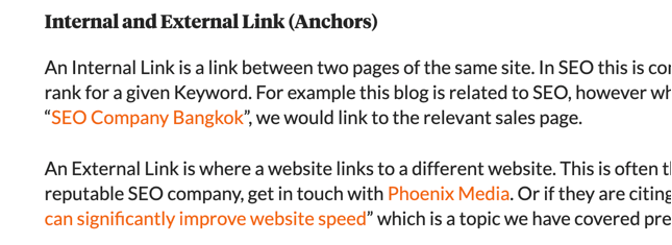
Anchor text is the clickable text of the hyperlink. When you link to another page, the words you choose as anchor text signal to search engines what the destination page is about. Using descriptive, relevant anchor text (for example, linking to your service page using the text "SEO services in Bangkok") is more informative than generic anchors like "click here" or "read more".
However, using the exact same keyword anchor text excessively can look unnatural. Vary your anchor text naturally while keeping it contextually relevant.
What are the best practices for internal linking?
Key best practices to follow:
- Link to relevant pages: only link to pages that are genuinely useful to the reader given the context
- Prioritise your most important pages: use internal links to direct authority towards the pages you most want to rank, such as service or product pages
- Use descriptive anchor text: make the link text meaningful rather than generic
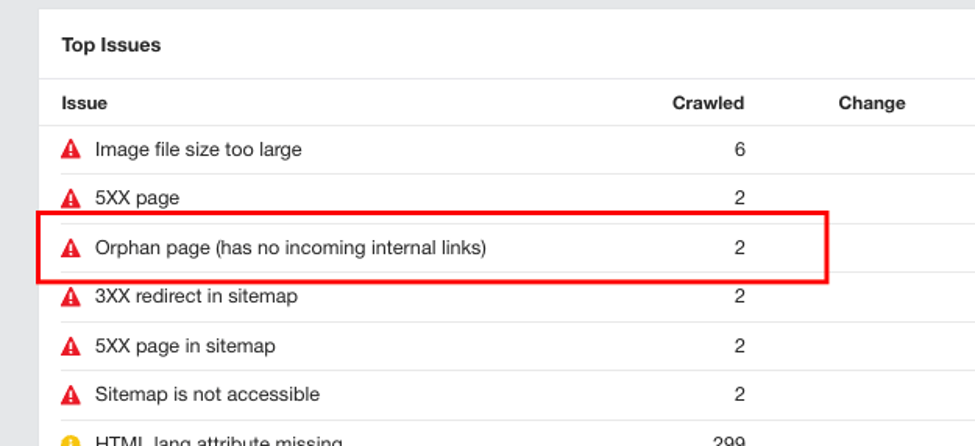
- Avoid orphan pages: ensure every important page has at least one or two internal links pointing to it
- Keep navigation logical: a well-structured site with clear categories makes internal linking more natural and easier to maintain
How many internal links should a page have?
There is no fixed rule. The right number of internal links depends on the length and content of the page. A short page with two or three contextually relevant links is better than a long page stuffed with dozens of forced links.
As a general principle, link when it adds genuine value to the reader and supports logical navigation through your site. For larger websites, using a tool to audit internal links periodically helps identify orphaned pages and opportunities to strengthen important sections of the site.