Facebook ads and organic Facebook posts are two distinct ways of distributing content on Facebook. Ads are paid placements managed through Meta Ads Manager; posts are unpaid content published directly to a Facebook Page. Understanding the difference matters because they serve different purposes, reach audiences differently, and are managed in completely separate parts of the platform.
What is an organic Facebook post?
An organic post is any piece of content published directly to a Facebook Page without paid promotion. It appears in the feeds of people who already follow the Page and, to a lesser extent, their connections if they interact with it. Organic reach on Facebook has declined substantially over the past decade: for most Pages, organic posts reach only a small percentage of followers, and that percentage continues to decrease as the platform prioritises content from friends and family in the feed algorithm.
What is a Facebook ad?
A Facebook ad is a paid placement created in Meta Ads Manager. Ads are shown to audiences defined by the advertiser using targeting options such as location, age, interests, behaviour, and custom audiences (such as people who have visited your website or engaged with your Page). Unlike organic posts, ads are not limited to existing followers and can reach anyone on Facebook and Instagram within the defined targeting parameters. Performance is tracked through the Ads Manager dashboard and the Meta pixel.

How do they compare?
| Organic post | Facebook ad | |
|---|---|---|
| Who sees it | Existing Page followers (and sometimes their connections) | Any audience you define, including non-followers |
| Cost | Free to publish | Paid (budget set in Ads Manager) |
| Where it's created | Directly on the Facebook Page | In Meta Ads Manager |
| Targeting | No control (algorithm decides distribution) | Full targeting controls (location, age, interests, custom audiences) |
| Reporting | Basic post insights (reach, likes, shares) | Full campaign reporting (reach, clicks, conversions, ROAS, CPA) |
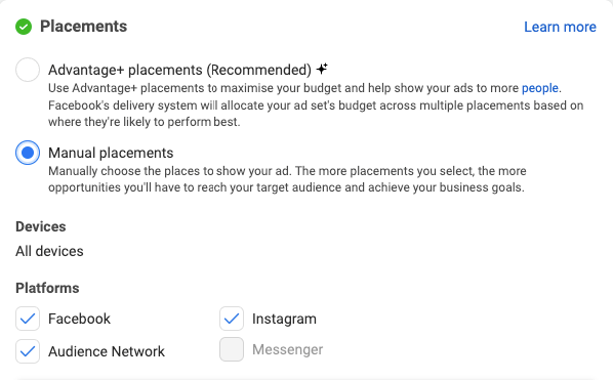
| Placement | Facebook feed only (unless shared) | Facebook, Instagram, Messenger, Audience Network |
Can you boost an organic post?
Yes. Facebook's Boost Post feature allows you to spend money to extend the reach of an existing organic post. A boosted post is technically an ad, but it has more limited targeting and optimisation options compared to a campaign built in Ads Manager. For straightforward awareness objectives, boosting can be a quick way to increase reach; for performance goals such as lead generation, purchases, or website traffic, building a campaign in Ads Manager gives significantly more control over targeting, bidding, and creative testing.
Do you still need organic posts if you are running ads?
Yes. A Facebook Page with no recent organic activity looks inactive and can reduce credibility when a prospective customer visits it directly. Organic posts also serve existing followers who already know the brand, while ads focus on reaching new audiences or driving specific actions. For most businesses, organic posts and paid ads serve complementary roles rather than replacing each other.