Meta Collaborative Ads, previously branded CPAS (Collaborative Performance Advertising Solution), are a co-funded advertising model used on marketplace platforms such as Lazada and Shopee. They allow brands and their authorised resellers to run ads on Facebook and Instagram that link directly to product listings on the marketplace, with ad spend shared between the brand and the seller. For brands selling through third-party resellers in Southeast Asia, Collaborative Ads provide a way to run performance advertising that drives traffic to the point of sale rather than to a brand website.
How do Collaborative Ads work?
Collaborative Ads work through a partnership between a brand, its authorised sellers, and the marketplace platform. The brand creates a campaign in Meta Ads Manager, linking it to a product catalogue feed provided by the marketplace, such as Lazada’s or Shopee’s Collaborative Ads catalogue. Ads are served to users on Facebook and Instagram, and clicking the ad takes the user directly to the product listing on the marketplace.
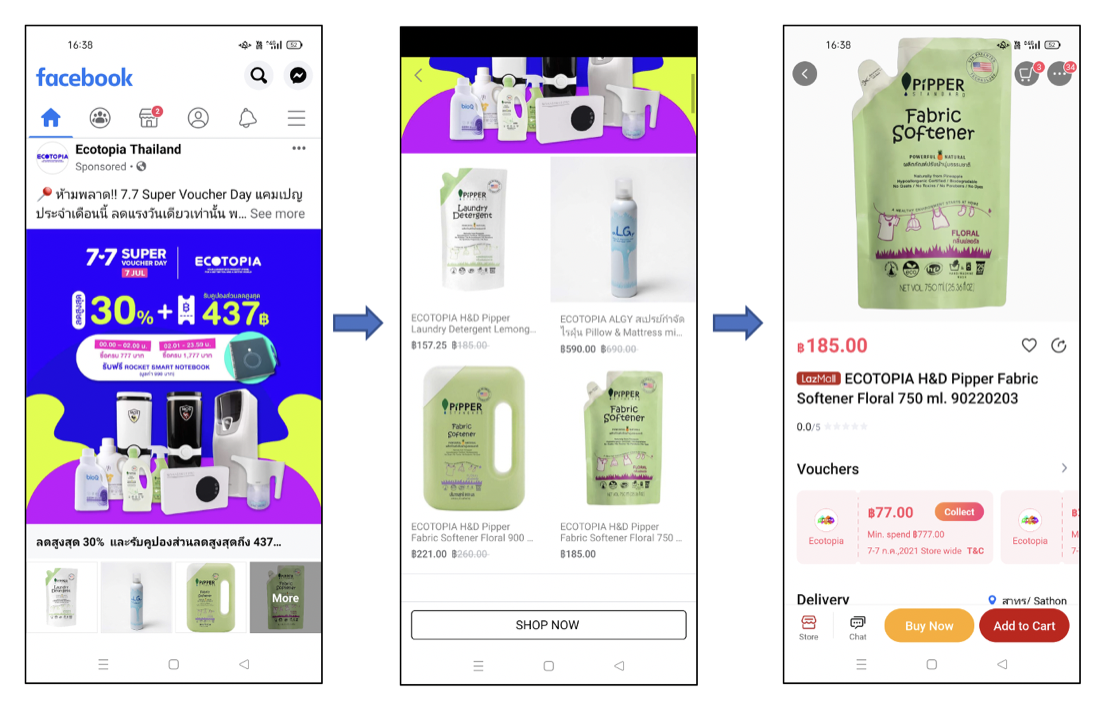
Conversions are tracked through the marketplace’s own pixel and attributed back to the campaign. The brand typically funds the media spend and the seller benefits from the resulting traffic and sales.
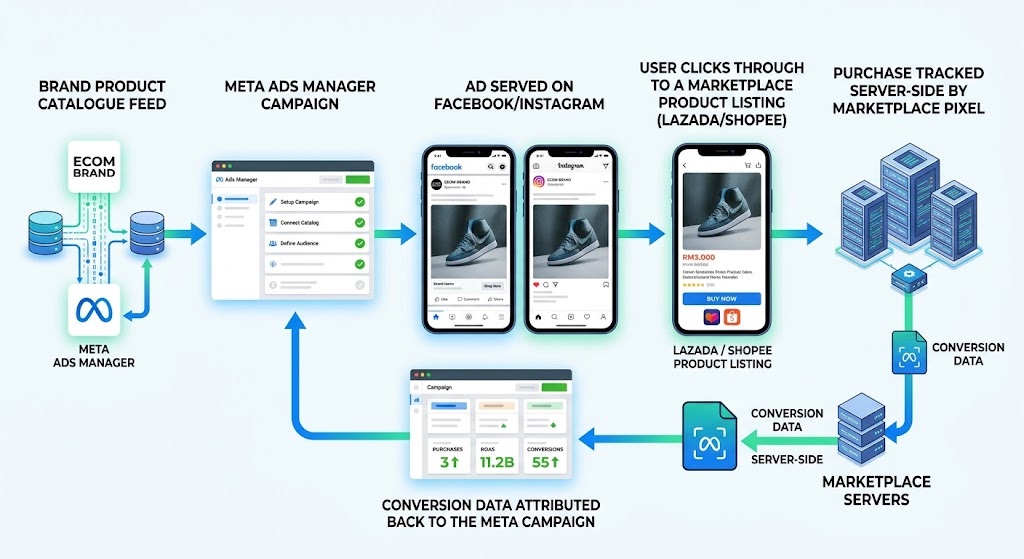
The Collaborative Ads flow: a Meta ad links straight to the product on Lazada or Shopee, where the purchase is tracked server-side by the marketplace, not by the Meta pixel.
Flow diagram showing a Collaborative Ads campaign linking from Meta Ads Manager through to a marketplace product listing and back with server-side conversion tracking
What platforms support Collaborative Ads?
Collaborative Ads are primarily available on Lazada and Shopee in Southeast Asia, including Thailand. Both platforms operate their own Collaborative Ads programmes that let eligible brand partners connect their product catalogues and run co-funded ads through Meta. Eligibility requirements and programme structures differ between Lazada and Shopee and can change, so brands need to apply through the respective platform’s partner or seller programme to gain access.
In our experience helping clients through this application process, the Lazada and Shopee onboarding steps are the slower part, not the Meta side. Brands who plan for a few weeks of lead time on marketplace approval, rather than expecting to launch the week they decide to run Collaborative Ads, avoid most of the frustration we see with this format.
What are the advantages of Collaborative Ads over standard Facebook ads?
The main advantage is attribution. Standard Facebook ads that drive traffic to a brand website rely on the Meta pixel to track purchases, which has become less reliable since Apple’s iOS privacy changes reduced pixel visibility. Collaborative Ads bypass this problem because the purchase happens on the marketplace, which tracks it server-side through its own system.
This typically produces more complete conversion data. Collaborative Ads also benefit from the marketplace’s built-in trust: users who see the ad are directed to a familiar platform where they already have payment details saved, which reduces checkout friction.
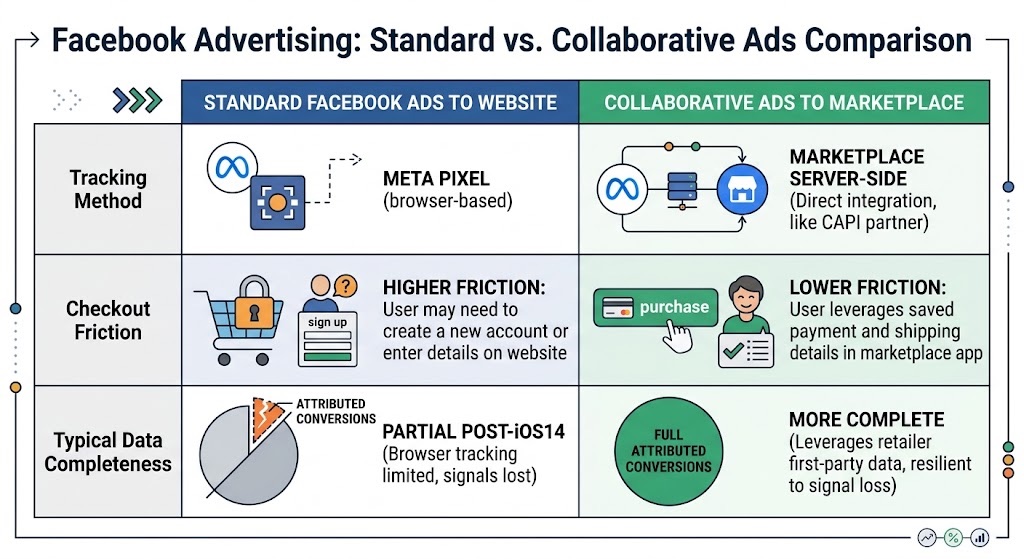
Why attribution is usually the deciding factor when a brand asks whether to run Collaborative Ads instead of standard website-conversion campaigns.
Comparison table contrasting standard Facebook ads driving to a website against Collaborative Ads driving to a marketplace listing, across tracking method and checkout friction
Is this relevant for brands in Thailand?
Yes, Thailand is one of the primary markets for Collaborative Ads in Southeast Asia. Lazada and Shopee both have strong market penetration in Thailand, and e-commerce purchasing behaviour on these platforms is well established. For brands that sell consumer products through marketplace resellers, Collaborative Ads are worth evaluating as part of a broader e-commerce paid media strategy.
At Phoenix Media, we have set up and managed Collaborative Ads campaign management for clients operating in the Thai marketplace space and can advise on eligibility, catalogue setup, and campaign structure. Our starting point with a new Collaborative Ads client is always a short audit of their existing marketplace listing quality (photos, pricing, stock accuracy) before we touch the ad side, since a poorly maintained listing will undercut even a well-targeted campaign.