Dynamic Search Ads (DSAs) are a Google Ads format that automatically generates ad headlines and matches search queries based on your website content, without requiring a manually built keyword list. Google crawls your site, identifies the content on each page, and uses that to determine which searches your ads should appear for and what the headline should say.
How do Dynamic Search Ads work?
When a search query matches content on your website, Google generates a relevant headline and directs the user to the most appropriate page on your site. The display URL is also generated automatically from the landing page URL. You write the description lines, but the headline and landing page are dynamic.
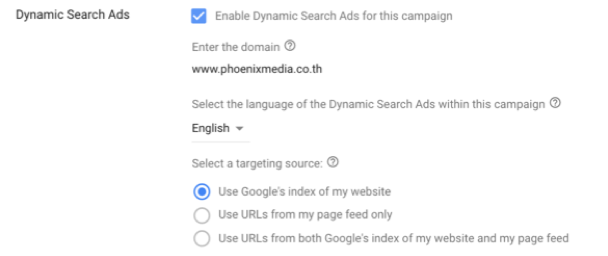
Targeting is controlled through dynamic ad targets: you can target all pages of your website, specific URL rules, or page categories that Google identifies from your site's content. DSAs use the same auction system and measurement metrics as standard search campaigns.
What are the benefits of Dynamic Search Ads?
DSAs offer several practical advantages, particularly for websites with large or frequently changing content:
- They capture search queries that manual keyword lists miss, particularly long-tail and niche queries
- They reduce the time required to build and maintain keyword lists for large product catalogues or content-heavy sites
- Generated headlines are dynamically matched to the search query, which often improves relevance
- They surface landing pages that might not be covered by existing search campaigns
- The Search Terms report highlights new queries worth adding as exact or phrase match keywords
What are the limitations of Dynamic Search Ads?
The main limitations to be aware of are:
- Less control over which pages are targeted and which queries trigger ads, particularly early in a campaign before negative keywords have been refined
- Pages with thin content, errors, or content that should not appear in ads may be surfaced if targeting is set to all pages
- Generated headlines can occasionally be inaccurate or off-brand if the site content is not well-structured or clearly written
- They work less well for websites with very little content or businesses with a small number of distinct pages
When should you use Dynamic Search Ads?
DSAs work best as a supplement to, rather than a replacement for, standard search campaigns. They are most useful for e-commerce sites with large product catalogues, content-heavy websites, and businesses that regularly add new pages and cannot maintain keyword lists manually. At Phoenix Media, we use DSAs to identify gaps in keyword coverage: the search terms they generate often reveal queries worth adding as exact or phrase match keywords in existing campaigns. Setting up page-level exclusions and a thorough negative keyword list before launch is important for keeping spend focused on relevant traffic.