A landing page is a standalone web page designed for a single, specific purpose: to convert visitors into leads or customers. Unlike a website's homepage or general pages, a landing page removes navigation and distractions and focuses entirely on one action, such as filling in a contact form, making a purchase, signing up for a trial, or downloading a resource.
How is a landing page different from a homepage?
A homepage serves as the front door to a website, giving visitors an overview of the business and multiple paths to explore. A landing page does the opposite: it receives traffic from a specific source (an ad, an email, a search result) and guides the visitor towards one defined action. Most landing pages have no main navigation menu, which prevents visitors from wandering away from the conversion goal. The lack of distractions is intentional and is what makes landing pages more effective than general website pages for converting paid or email traffic.
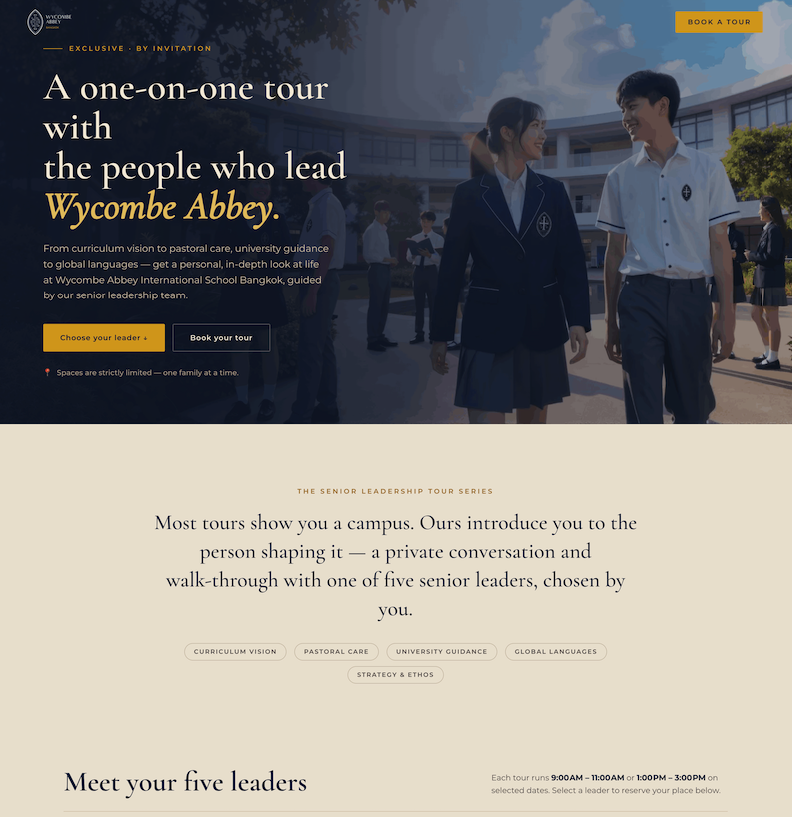
What makes a good landing page?
Effective landing pages share several characteristics:
- A single, clear call to action: the page exists to prompt one specific action and everything on it should support that goal
- Message match: the headline and offer on the landing page should directly reflect what the ad or link that brought the visitor there promised
- Concise copy: the content should address the visitor's need and remove hesitation quickly, without unnecessary length
- Trust signals: testimonials, client logos, security badges, or guarantees that reduce risk in the visitor's mind
- Fast load time: slow landing pages significantly reduce conversion rates, particularly on mobile devices
When should you use a landing page instead of sending traffic to your website?
For paid advertising campaigns, a dedicated landing page almost always outperforms a general website page because it maintains message match with the ad and removes navigation that would otherwise cause visitors to leave without converting. Landing pages are particularly effective for lead generation campaigns, product launches, event registrations, free trials, and any campaign with a specific, measurable conversion goal. If you are running Google or Meta ads and sending traffic to your homepage, a dedicated landing page is one of the simplest ways to improve return on ad spend. At Phoenix Media, landing page creation and optimisation is a standard part of our paid media service for clients in Thailand, as the majority of conversion improvements in Thai campaigns come from fixing the post-click experience rather than the ad itself.