
Meta descriptions, a type of meta tag, have long been a core element of on‑page SEO: concise snippets beneath your page title intended to entice clicks. But with data showing that around 70 percent of custom meta descriptions are rewritten by Google, many business owners are questioning if the time spent crafting them is worthwhile.
In this article, we’ll cut through the noise and help you decide whether to write your own meta descriptions in 2025, or let Google handle it. You’ll discover when manual snippets still matter, how to use rich schema markup to drive visibility, and how we apply strategic insight to optimise the right pages.
Why Opinions Differ
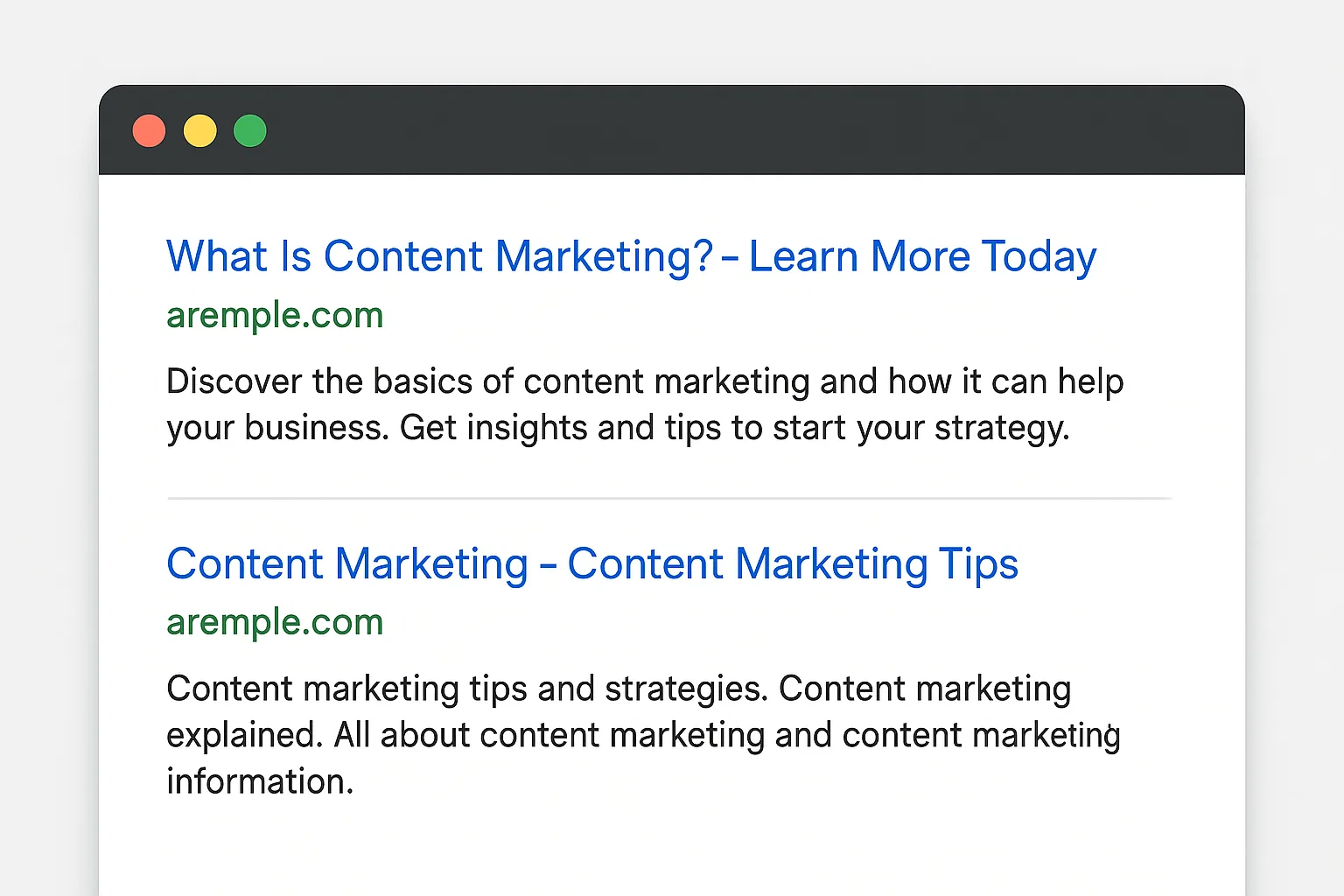
Often, multiple variations of snippets can appear for the same page in search results. Google aims to create the most relevant summary based on user query instead of relying on your selected text.
Case for Skipping Them
Some research shows that removing custom meta descriptions may even positively impact click-through rates on certain sites. This suggests that Google’s auto-generated snippets tailored to individual queries may perform just as well as manually crafted ones in many cases.
Case for Keeping Them
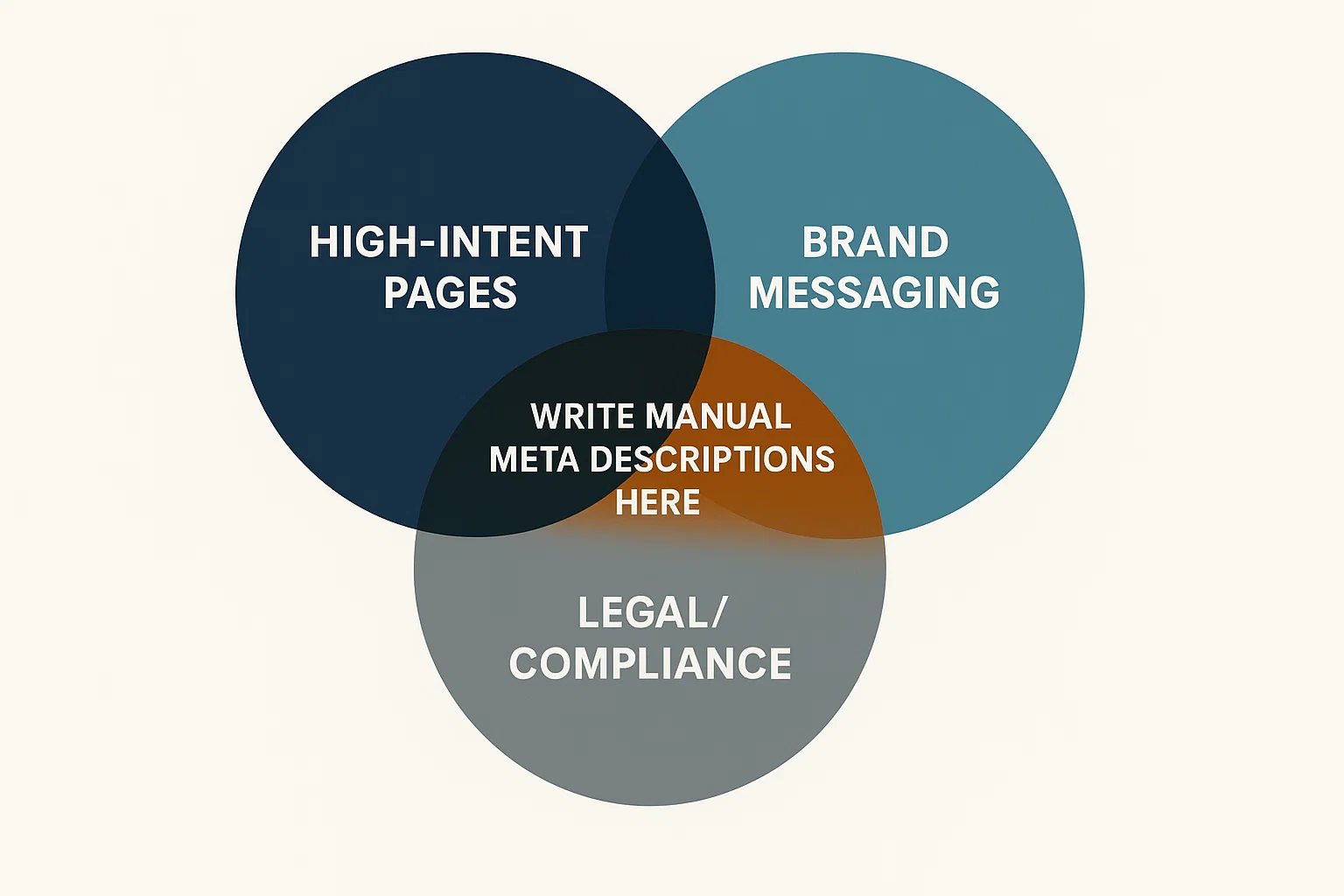
Nevertheless, highly strategic pages, such as product listings, branded pages, local content or compliance-heavy material, can still benefit from manual meta descriptions. These are visible in search previews, voice assistants, and social sharing. It is generally recommended to write descriptions for pages where you want to shape your brand message or guide visitor behaviour.
What Search Engines Expect in 2025
Focus on User Intent, Not Just Keywords
Search engines like Google are interpreting intent, rather than matching keywords. Meta descriptions that rely on outdated keyword stuffing are often ignored. Instead, Google rewrites snippets using content that best answers the search query in context. Intent-driven summaries now perform better than keyword-heavy ones.

Semantic and Structured Context Matters
Google increasingly relies on structured data (schema markup) and semantically rich content to understand the relevance of a page. When your content includes related entities, synonyms, and natural phrasing, it becomes more likely to be selected for dynamic snippet generation. Incorporating schema markup like FAQ or HowTo helps reinforce that context and improves visibility in search features.
Performance Signals Play a Role
Click-through rates (CTR), dwell time, and user engagement metrics help Google decide whether to stick with your meta description or rewrite it. Poor-performing snippets are often replaced.
When and Where to Write Meta Descriptions
Prioritise High-Impact Pages
Not every page needs a custom meta description in 2025. Focus your time where it matters most, product pages, service pages, and content with high search volume or conversion potential. These are the touchpoints where clear messaging can influence click-through rates and shape brand perception. For bulk content or blog archives, Google is likely to rewrite them anyway.
Use Intent-Focused, Concise Copy
Good meta descriptions answer the searcher’s question in a sentence or two. Aim for around 150–160 characters, and make sure the message matches the content on the page. Avoid keyword stuffing. Instead, speak clearly about what the page offers and include a soft call to action like “Find out more” or “See full range”. Google’s documentation on snippets confirms they prefer summaries that reflect real value.
Monitor and Adjust
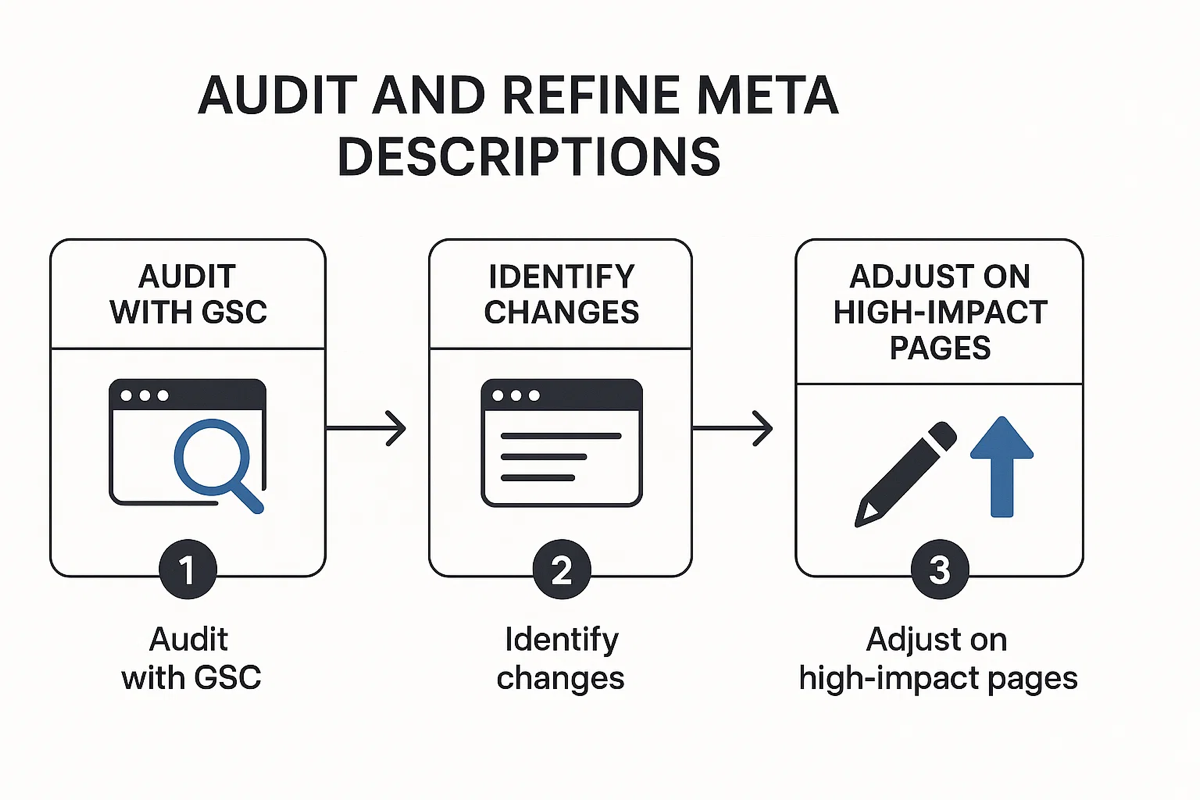
Using tools like Google Search Console, track how often your descriptions are being used or replaced, and measure click-through rates on key pages. We regularly audit and refine meta content based on live data, without wasting time on low-impact edits.
How to Optimise Meta Snippets in 2025
Use Schema for Enhanced Snippets
Schema markup plays a major role in how your content is displayed in search. Adding structured data such as FAQ, Product, or Review schema helps Google surface rich results like star ratings, pricing, or quick answers. This improves both visibility and perceived authority. You can learn more about how to implement these formats in Google’s Structured Data Guide.
Build Semantic Landing Pages
Optimise pages using related terms, clear headings, and entity-based language. This helps Google understand your content’s context and makes it more likely to generate a relevant snippet from your page. Internal linking and topic clusters further support this structure.
Let AI Assist, With Oversight
For large-scale websites, AI tools can help generate initial meta descriptions. But human review is essential for priority pages to maintain clarity, tone, and intent. Use automation where it saves time, but always refine where it matters most.
Are Meta Descriptions Still Worth It?
In 2025, meta descriptions are not one-size-fits-all. Google may rewrite them, but when used strategically, they still help shape user perception and improve search visibility.
At Phoenix Media, we focus on where meta descriptions make a difference, combining smart content strategy, structured data, and performance tracking to ensure your pages are seen and understood. Contact our team if you have any questions about how to build a solid SEO foundation that delivers results.
Published July 20, 2025 · by Robert Wee